
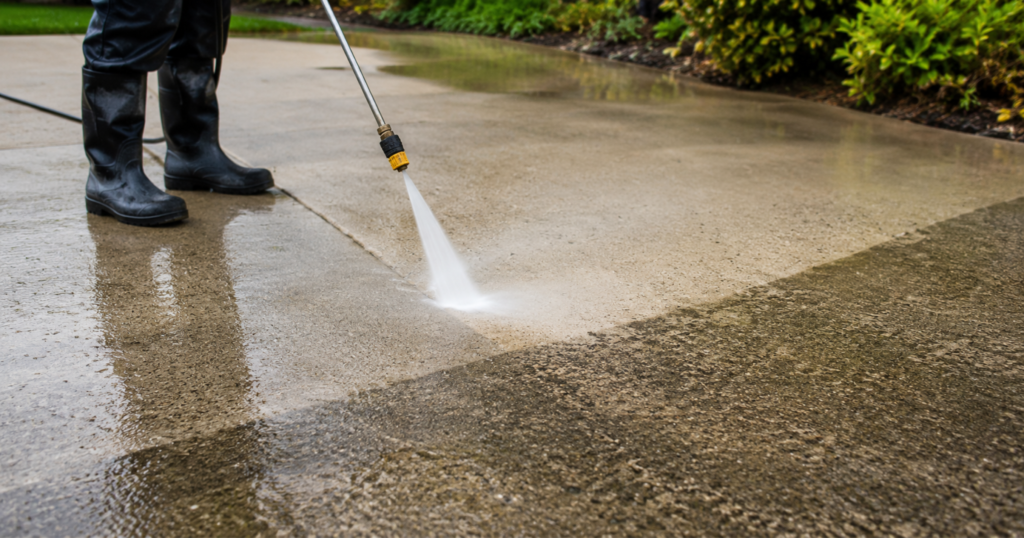
If you’re comparing soft washing vs pressure washing for your next exterior clean, the short answer for most Melbourne homes is: it depends on what you’re cleaning. Pressure washing uses high-powered water to blast dirt and grime off hard, durable surfaces. Soft washing uses much lower water pressure, combined with a specialised cleaning solution, to gently lift moss, algae and mould from more delicate surfaces.
Getting the soft washing vs pressure washing choice wrong is one of the most common, and most damaging, mistakes homeowners make. High pressure on roof tiles, render or weatherboard can crack, strip or dislodge materials that were never designed to handle that kind of force. This soft washing vs pressure washing guide breaks down exactly how the two methods differ, which surfaces suit each one, and how to work out what your property actually needs.
What Is Pressure Washing?
Pressure washing uses a machine that forces water through a narrow nozzle at high pressure, with the exact setting adjusted depending on the equipment and surface. The force of the water does most of the work, physically breaking grime, dirt and stains away from the surface.
It’s a mechanical cleaning method, which makes pressure washing ideal for:
- Concrete driveways and paths
- Pavers and exposed aggregate
- Brick and stone
- Car parks and commercial hardstands
- Fences and decking (at a lower, adjusted pressure)
Because it relies on force rather than chemicals, pressure washing is fast and effective on hard, non-porous surfaces that can handle the impact.
What Is Soft Washing?
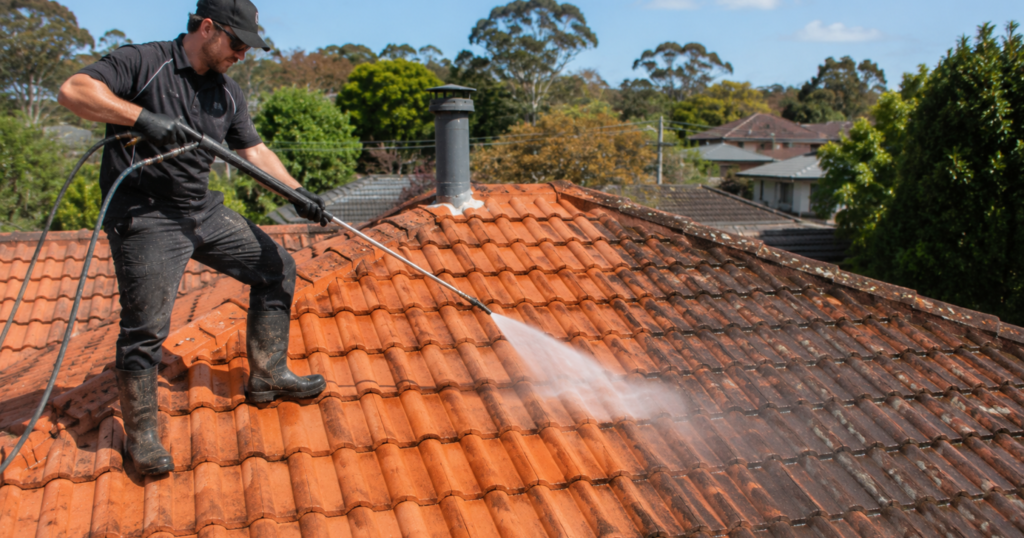
Soft washing takes a much gentler approach to exterior cleaning. Instead of relying on high pressure, it combines low-pressure water with a biodegradable cleaning solution that’s applied to the surface and left to dwell before being rinsed away.
The cleaning solution does the heavy lifting here, breaking down organic growth like moss, algae, mould and lichen at the root, rather than physically blasting it off. This makes soft washing the safer choice for:
- Roof tiles, particularly terracotta and concrete
- Rendered and painted walls
- Weatherboard and timber cladding
- Delicate or ageing brickwork
- Solar panels
Because the pressure is so low, soft washing won’t strip paint, crack tiles, or force water behind cladding the way high pressure can.
Soft Washing vs Pressure Washing: The Key Differences
- Water pressure: Pressure washing uses high water pressure, while soft washing uses low water pressure.
- Cleaning method: Pressure washing relies on mechanical force from the water itself, while soft washing relies on a specialised chemical solution combined with low pressure.
- Best suited surfaces: Pressure washing suits concrete, pavers, brick and hardstands, while soft washing suits roof tiles, render, weatherboard and solar panels.
- Risk to delicate surfaces: Pressure washing carries a higher risk of damage if used incorrectly, while soft washing is low-risk when applied correctly.
- Speed: Pressure washing is generally faster on suitable surfaces, while soft washing can take slightly longer due to the dwell time needed for the solution to work.
- Long-term result: Pressure washing removes surface dirt and stains, while soft washing kills organic growth at the root for a longer-lasting clean.
Which Surfaces Need Which Method?
Driveways, paths and car parks are almost always better suited to pressure washing. These surfaces are hard, flat and built to withstand force, so high pressure clears years of grime, oil and tyre marks efficiently.
Roofs, render and weatherboard are a different story. These surfaces are more porous and often coated, which means high pressure risks stripping protective layers or driving water where it shouldn’t go. Soft washing treats the underlying moss or algae without that risk, making it the go-to method for roof soft washing.
Fences, decking and outdoor furniture sit somewhere in between. Depending on the material and its condition, a professional may use a reduced-pressure wash, a soft wash, or a combination of both.
Solar panels should almost always be soft washed. High pressure can damage the seals or surface coating, which affects performance over time.
Solar panels should almost always be soft washed. High pressure can damage the seals or surface coating, which affects performance over time. Solar Victoria also advises against using a pressure hose on panels.
Common Mistakes to Avoid
- Using high pressure on roof tiles: this can crack tiles, strip protective coatings, or dislodge them entirely, leading to avoidable repairs.
- Assuming soft washing is “less effective”: lower pressure doesn’t mean a lesser clean. For organic growth like moss and algae, soft washing often delivers better, longer-lasting results than pressure alone.
- Skipping a test patch: even experienced professionals test an inconspicuous area first, since surface condition can vary across the same property.
- Choosing based on speed rather than suitability: pressure washing might look faster, but if it damages a delicate surface, the repair and restoration work outweighs any time saved.
How to Decide Which Your Home Needs
In most cases, a full exterior house wash uses both methods, matched to the right surface. As a general guide:
- If it’s flat, hard and built to take impact, such as driveways, paving or hardstands, choose pressure washing.
- If it’s porous, coated, painted or delicate, such as roof tiles, render, weatherboard or solar panels, choose soft washing.
- If you’re unsure, or the surface is a mix of materials, get a professional assessment before booking.
A good provider will assess your property and recommend the right method for each surface, rather than applying one approach to everything.
Benefits of Getting the Method Right
- Protects paint, render and roof coatings from unnecessary damage
- Extends the life of tiles, cladding and painted surfaces
- Removes organic growth like moss and algae more effectively than pressure alone
- Reduces the risk of avoidable repairs caused by incorrect technique
- Gives a cleaner result that lasts longer, particularly on roofs
There’s no single winner in the soft washing vs pressure washing debate, because they’re built for different jobs. Pressure washing is the right call for hard, durable surfaces like driveways and paving. Soft washing is the safer, more effective option for roofs, render, weatherboard and anything coated or delicate.
If you’re not sure which your property needs, it’s worth getting a professional opinion before booking. The right method protects your surfaces and gets a better result the first time around.
Is soft washing better than pressure washing?
Neither is universally “better.” Soft washing suits delicate, porous surfaces like roof tiles and render, while pressure washing suits hard, durable surfaces like concrete and paving.
Can pressure washing damage my roof?
Yes. High pressure can crack tiles, strip protective coatings, or force water under tiles, which is why soft washing is generally recommended for roof cleaning.
Is soft washing safe for painted surfaces?
Yes, when done correctly. Soft washing uses low pressure and a cleaning solution designed to lift dirt and organic growth without stripping paint.
Does soft washing use harsh chemicals?
Professional soft washing solutions are typically diluted and applied at controlled concentrations, with care taken around plants and garden beds during rinsing.
How long does a soft wash take compared to pressure washing?
Soft washing can take slightly longer due to the dwell time needed for the solution to work, but it often produces more thorough, longer-lasting results on organic growth.
Can I use a pressure washer for soft washing?
Not effectively. Soft washing needs specific low-pressure equipment, nozzles and chemical delivery systems, not just a pressure washer turned down low.
Which method is best for solar panels?
Soft washing is generally recommended for solar panels, since high pressure can damage seals and surface coatings that affect efficiency.
Not sure which method your property needs? Get in touch for a free, no-obligation assessment and we’ll recommend the right approach for every surface.
There’s no single winner in the soft washing vs pressure washing debate, because each method is built for a different job. Pressure washing is the right call for hard, durable surfaces like driveways and paving, while soft washing is the safer, more effective option for roofs, render, weatherboard and anything coated or delicate.
If you’re still weighing up soft washing vs pressure washing for your property, the Revive Group team can assess every surface and recommend the right approach, so you get a better result the first time without risking damage. For expert advice on soft washing vs pressure washing in Melbourne, call James on 0480 565 941 or request a free quote today.
