
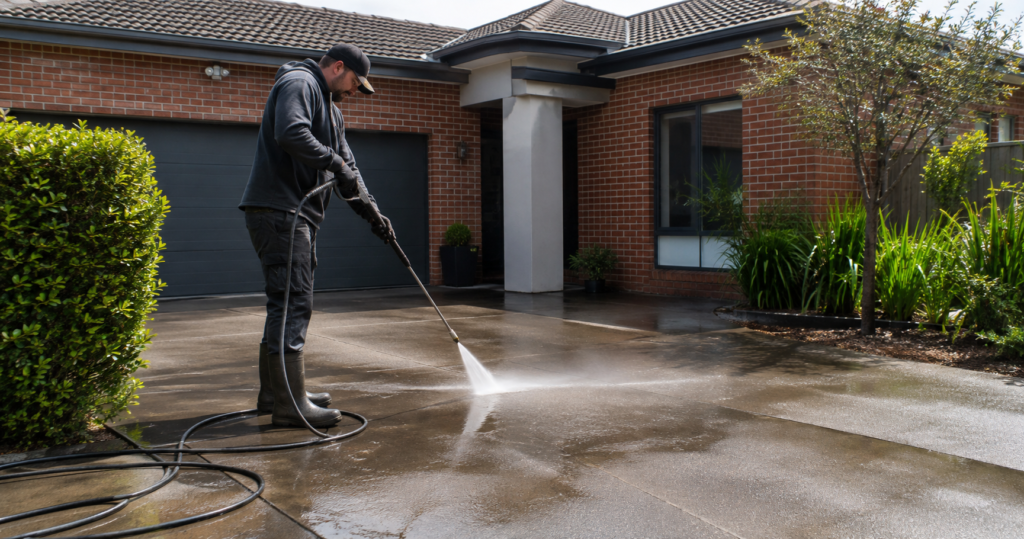
Every Melbourne property picks up dirt, algae, and grime over time, whether it’s a driveway shaded by a large tree or a rendered wall exposed to wind and rain. Pressure washing is one of the most effective ways to restore these surfaces, but it’s also one of the most misunderstood cleaning methods. Used correctly, it can transform tired concrete and brickwork. Used incorrectly, it can strip paint, crack tiles, or damage mortar joints.
This guide covers what pressure washing actually involves, which surfaces it suits, how it fits into regular home maintenance, and the mistakes worth avoiding, so you can make an informed decision for your property.
What Is Pressure Washing?
Pressure washing uses a machine that forces water through a narrow nozzle at high pressure. That force physically dislodges dirt, grime, mould, and built-up stains from hard surfaces, without needing to scrub by hand.
It’s a mechanical cleaning process, meaning the water pressure itself does most of the work. This makes it fast and highly effective, but also means the technique and pressure level need to match the surface being cleaned.
Which Surfaces Benefit from Pressure Washing?
Pressure washing is best suited to hard, durable, non-porous surfaces that can handle direct force. Around a typical Melbourne home, that includes:
- Concrete driveways and paths – One of the most common uses, especially for removing oil stains, tyre marks, and general grime.
- Pavers and exposed aggregate – Restores colour and removes moss build-up between joints.
- Brick walls and retaining walls – Removes dirt, algae, and general weathering.
- Car parks and commercial hardstands – Ideal for larger areas that accumulate oil, rubber, and dirt over time.
- Fences and decking – With adjusted, lower pressure to avoid splintering or damaging timber.
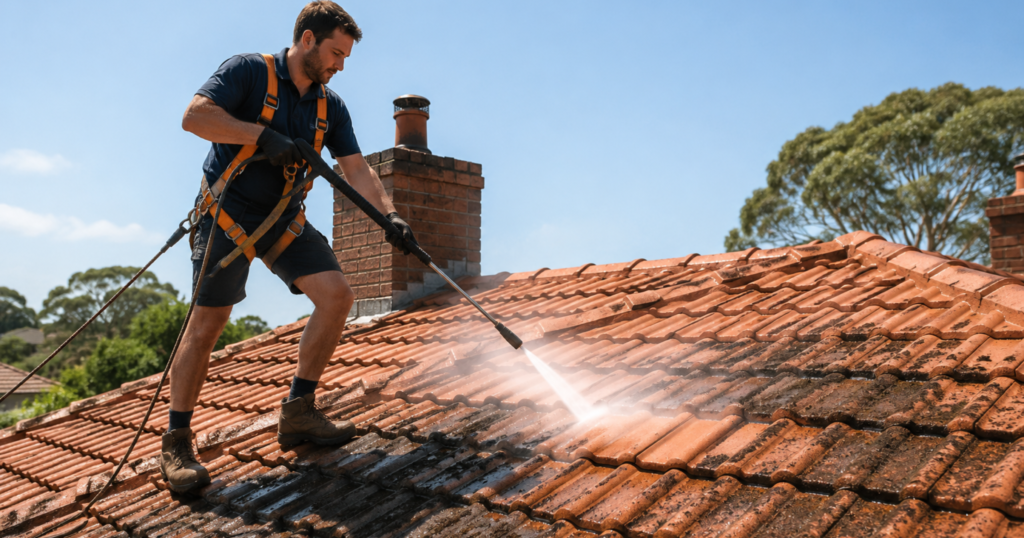
Surfaces like roof tiles, render, weatherboard, and solar panels are generally better suited to a gentler soft wash approach, since high pressure can cause damage rather than simply cleaning them.
Why Pressure Washing Matters for Melbourne Homes
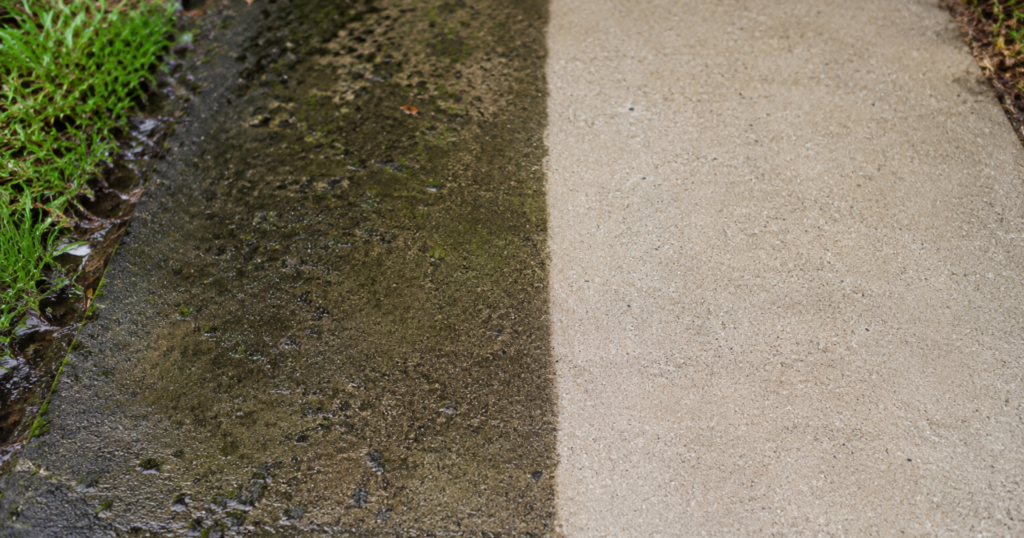
Melbourne’s climate plays a real role in how quickly outdoor surfaces get dirty. Shaded, damp areas encourage moss and algae growth, particularly through the cooler, wetter months. Left untreated, this build-up doesn’t just look unsightly, it can also become a slip hazard on paths and driveways.
Regular pressure washing helps with:
- Preventing long-term surface damage – Grime and organic growth can gradually degrade concrete and masonry if left for years.
- Reducing slip risks – Moss and algae on paths, steps, and driveways become genuinely slippery when wet.
- Maintaining street appeal – A clean exterior makes a noticeable difference to how a property presents, especially before selling or renting.
- Preparing surfaces for further work – Many painting, sealing, or repair jobs need a clean surface to start from.
How Often Should You Pressure Wash?
There’s no single answer that fits every property, since it depends on exposure, shade, and surface type. As a general guide:
- Driveways and paths typically benefit from an annual clean, or more often in shaded, moss-prone areas.
- House exteriors are often cleaned every one to two years, depending on cladding type and weather exposure.
- Car parks and commercial areas usually follow a more frequent schedule due to higher traffic and oil residue.
If you notice moss, algae, or a change in surface colour, that’s usually a sign it’s time for a clean rather than waiting for a fixed date. Keep in mind that Victoria’s Permanent Water Saving Rules limit when hard surfaces can be cleaned with water. Cleaning is generally allowed for safety hazards, surface staining, or construction work, and a water-efficient high-pressure cleaner must be used where available.
Common Pressure Washing Mistakes to Avoid
- Using the wrong pressure for the surface – Timber, render, and older mortar joints need far less pressure than concrete or brick.
- Skipping a test patch – Testing an inconspicuous area first helps confirm the surface can handle the pressure being used.
- Ignoring drainage and runoff – Wastewater needs to be managed properly, particularly near stormwater drains.
- Attempting DIY on delicate or high-access areas – Multi-storey exteriors and roof-adjacent areas carry real safety risks without the right equipment and training.
- Cleaning too infrequently – Waiting years between cleans means tougher, more embedded grime that takes longer to remove.
DIY vs Professional Pressure Washing
A domestic pressure washer can handle small, straightforward jobs like a garden path or outdoor furniture. However, professional equipment generally offers more control over pressure, water temperature, and nozzle type, which matters for larger areas or more delicate surfaces.
Professionals also bring experience in reading a surface, knowing when a lower pressure or different technique is needed, and managing wastewater responsibly. For larger jobs, awkward access, or anything involving working at height, a professional is generally the safer and more reliable option.
Benefits of Professional Pressure Washing
- Restores the appearance of tired, weathered surfaces
- Removes slip hazards from paths, driveways, and steps
- Extends the working life of concrete, brick, and timber
- Uses equipment and techniques suited to each specific surface
- Saves time and physical effort compared to manual scrubbing
Pressure washing is one of the most practical ways to keep a Melbourne property looking its best and functioning safely. The key is matching the right pressure and technique to each surface, since what works for a concrete driveway can damage a timber deck or rendered wall.
If you’re unsure what your property needs, a professional assessment is the most reliable way to find out, without risking damage from a mismatched approach.
What is pressure washing used for?
Pressure washing is used to clean hard, durable surfaces like driveways, paths, brick walls, and car parks by removing dirt, grime, algae, and stains with high-pressure water.
Is pressure washing safe for all surfaces?
No. Hard, non-porous surfaces like concrete and brick generally handle pressure washing well, while delicate surfaces like roof tiles, render, and weatherboard are better suited to a gentler soft wash.
How often should driveways be pressure washed?
Most driveways benefit from a clean around once a year, though shaded or moss-prone areas may need more frequent attention.
Can pressure washing damage concrete?
Excessive pressure or an incorrect nozzle can etch or damage the surface of older or weaker concrete, so technique and pressure level matter.
Is professional pressure washing better than a DIY approach?
For larger areas, delicate surfaces, or anything involving height access, professional equipment and experience generally deliver a safer, more consistent result.
Does pressure washing remove moss and algae permanently?
Pressure washing removes visible growth, but regrowth can occur over time, particularly in shaded or damp areas. Regular cleaning helps keep it under control.
What’s the difference between pressure washing and soft washing?
Pressure washing uses high-force water to physically remove dirt from hard surfaces, while soft washing uses low pressure and a cleaning solution to treat organic growth on more delicate surfaces.
This guide was written by the Revive Group team, Melbourne exterior cleaning specialists with more than 10 years of experience. Our trained team specialises in pressure washing, driveway and concrete cleaning, soft wash roof cleaning, gutter cleaning, and commercial and carpark washing. We service homes and businesses across Melbourne’s north-eastern suburbs, including Ivanhoe, Preston, Bundoora, Reservoir, Bulleen, Balwyn, and Templestowe, as well as the western and southern suburbs.
If you need help with your property, call James on 0480 565 941 or request a free quote.
