
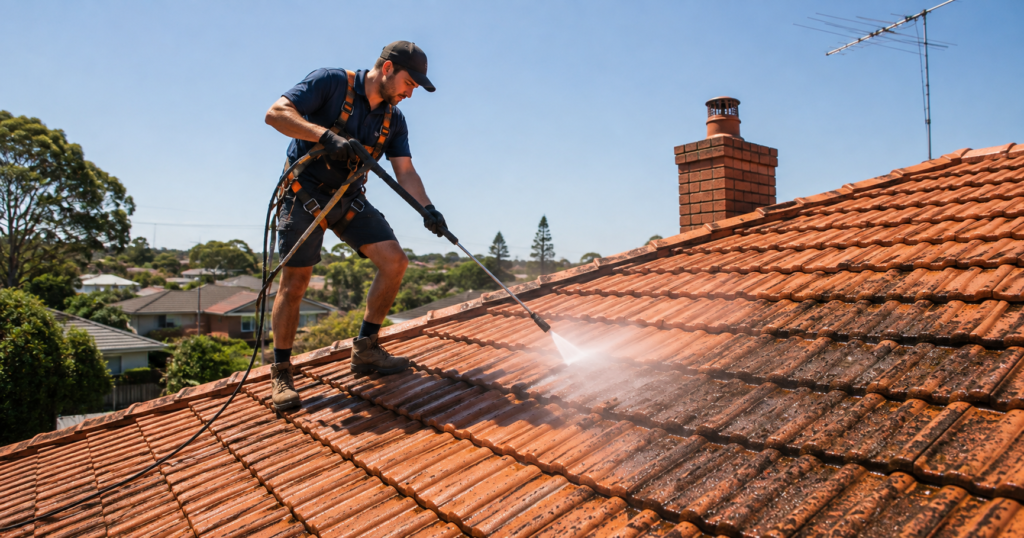
A roof does a lot of quiet, unglamorous work protecting a home from Melbourne’s weather, and it rarely gets much attention until moss, algae, or grime become obvious from the street. Roof cleaning Melbourne homeowners can rely on isn’t just about appearances either. Left untreated, organic growth can hold moisture against tiles, contribute to blocked gutters, and gradually shorten the life of roofing material.
This guide covers how roof cleaning in Melbourne works, what causes build-up in the first place, how often it’s needed, and what to look for in a professional service, so you can keep your roof in good condition without unnecessary risk.
Why Roofs Get Dirty in the First Place
Melbourne’s mix of rain, humidity, and shaded tree cover creates ideal conditions for organic growth on roofs. A few common culprits:
- Moss – Thrives in damp, shaded areas, particularly on the south-facing side of a roof or under overhanging branches.
- Algae – Often appears as dark streaking, especially on tile roofs exposed to consistent moisture.
- Lichen – Forms tougher, crusty patches that can be more stubborn to remove than moss or algae alone.
- General dust and debris – Builds up gradually from wind, nearby trees, and surrounding construction or traffic.
Porous materials like terracotta and concrete tiles tend to hold onto this build-up more than smoother materials like Colorbond, which is one reason tile roofs often need more frequent attention.
Why Roof Cleaning Matters
Beyond kerb appeal, a clean roof plays a genuine role in protecting the rest of the home.
- Prevents moisture retention – Moss and algae can trap dampness against the roof surface, which may contribute to gradual wear over time.
- Reduces gutter blockages – Debris and organic growth washed off the roof often ends up in the gutters, so a clean roof supports better water flow during rain.
- Protects roofing material – Regular cleaning helps prevent long-term buildup that can be harder, and more invasive, to remove later.
- Improves overall property presentation – A clean roof noticeably lifts the appearance of a home, particularly from street view.
Pressure Washing vs Soft Washing for Roofs
Not every roof cleaning method suits every roof. Two main approaches are used:
- Pressure washing uses higher-force water to physically remove dirt and buildup. It’s generally more suited to durable, non-porous roofing materials.
- Soft washing uses lower pressure combined with a specialised cleaning solution to treat organic growth at the root, without the physical force that can crack or dislodge tiles.
For most tiled roofs, particularly older terracotta and concrete tiles, soft washing is the safer choice. High pressure can crack tiles, strip protective coatings, or force water beneath tiles that were never designed to handle that kind of impact.
How Roof Material Affects Cleaning
Terracotta and concrete tiles are porous and prone to holding onto moss and algae, especially in shaded areas. These generally respond best to a soft wash approach.
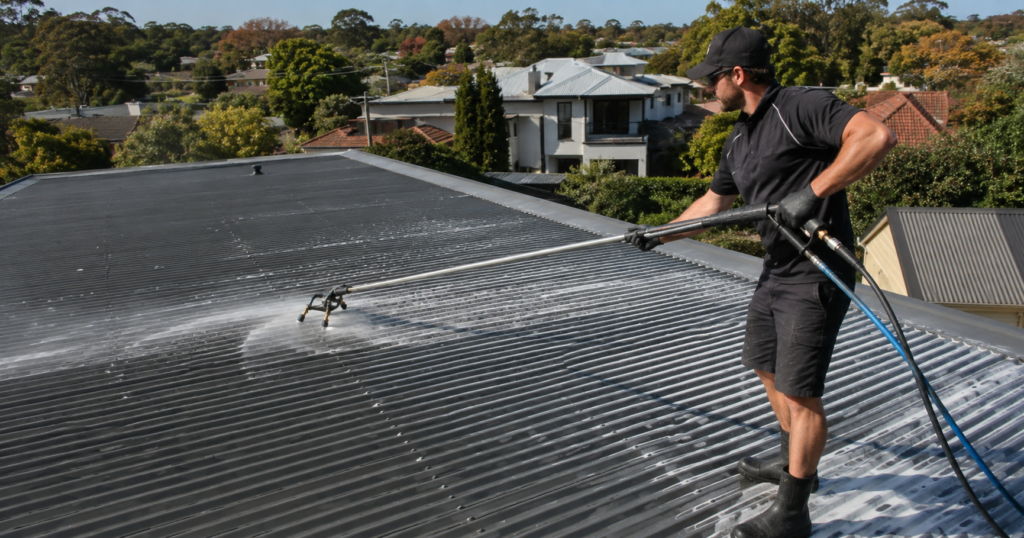
Colorbond and metal roofing tends to be less porous, meaning dirt and grime sit more on the surface. Even so, correct pressure and technique are still important to avoid scratching protective coatings.
Common Roof Cleaning Mistakes
- Attempting a DIY clean – Roof work involves genuine height risk, and the wrong pressure or technique can crack tiles or cause them to shift.
- Using high pressure on tile roofs – This is one of the most common causes of accidental roof damage during cleaning.
- Ignoring the gutters – Cleaning a roof without also clearing the gutters means debris just washes straight back into them.
- Waiting until growth is heavy – Established moss and lichen take longer, and more intensive treatment, to remove than early-stage growth.
What to Look for in a Roof Cleaning Provider
- Experience with your specific roof material, particularly if you have older or more delicate tiles
- The right safety equipment for working at height, including harnesses and anchor points where needed
- A clear explanation of which method, soft wash or pressure wash, they’ll use and why
- Appropriate insurance for working at height on residential property
- A willingness to inspect the roof, rather than quoting sight unseen
Benefits of Professional Roof Cleaning
- Removes moss, algae, and lichen safely without damaging tiles
- Reduces the risk of blocked gutters from washed-down debris
- Supports the long-term condition of roofing material
- Avoids the significant safety risks of DIY roof work
- Improves the overall appearance and presentation of the property
Roof cleaning is one of those home maintenance tasks that’s easy to overlook until it becomes obvious from the street, but it plays a real role in protecting the rest of the property. Choosing the right method for your roof material, and leaving height-related work to a professional, makes a meaningful difference to both the result and your safety.
If you’re noticing moss, algae, or general buildup, it’s worth getting a professional assessment to understand what your specific roof needs.
Regular cleaning is one part of ongoing roof maintenance, helping homeowners identify and address buildup before it becomes more difficult to manage.
Why does moss grow on roofs?
Moss thrives in damp, shaded conditions, which is why it’s most common on south-facing roof sections or areas under tree cover.
Is pressure washing safe for roof tiles?
Not always. High pressure can crack tiles, strip coatings, or dislodge them, which is why soft washing is generally recommended for tiled roofs.
Does roof cleaning help prevent leaks?
While roof cleaning doesn’t repair existing damage, removing moss and algae can help prevent moisture-related issues from building up over time.
Should gutters be cleaned at the same time as the roof?
Generally yes. Debris washed off the roof often ends up in the gutters, so clearing them together gives a more complete result.
Can I clean my own roof?
It’s not recommended due to the safety risks of working at height and the potential for damage from incorrect pressure or technique. Professional cleaning is the safer option.
What’s the difference between soft washing and pressure washing for roofs?
Soft washing uses low pressure and a cleaning solution to treat organic growth gently, while pressure washing uses high-force water, which suits harder, more durable surfaces.
